Science
Seeing Change.
Measuring Change.
Understanding What Comes Next.
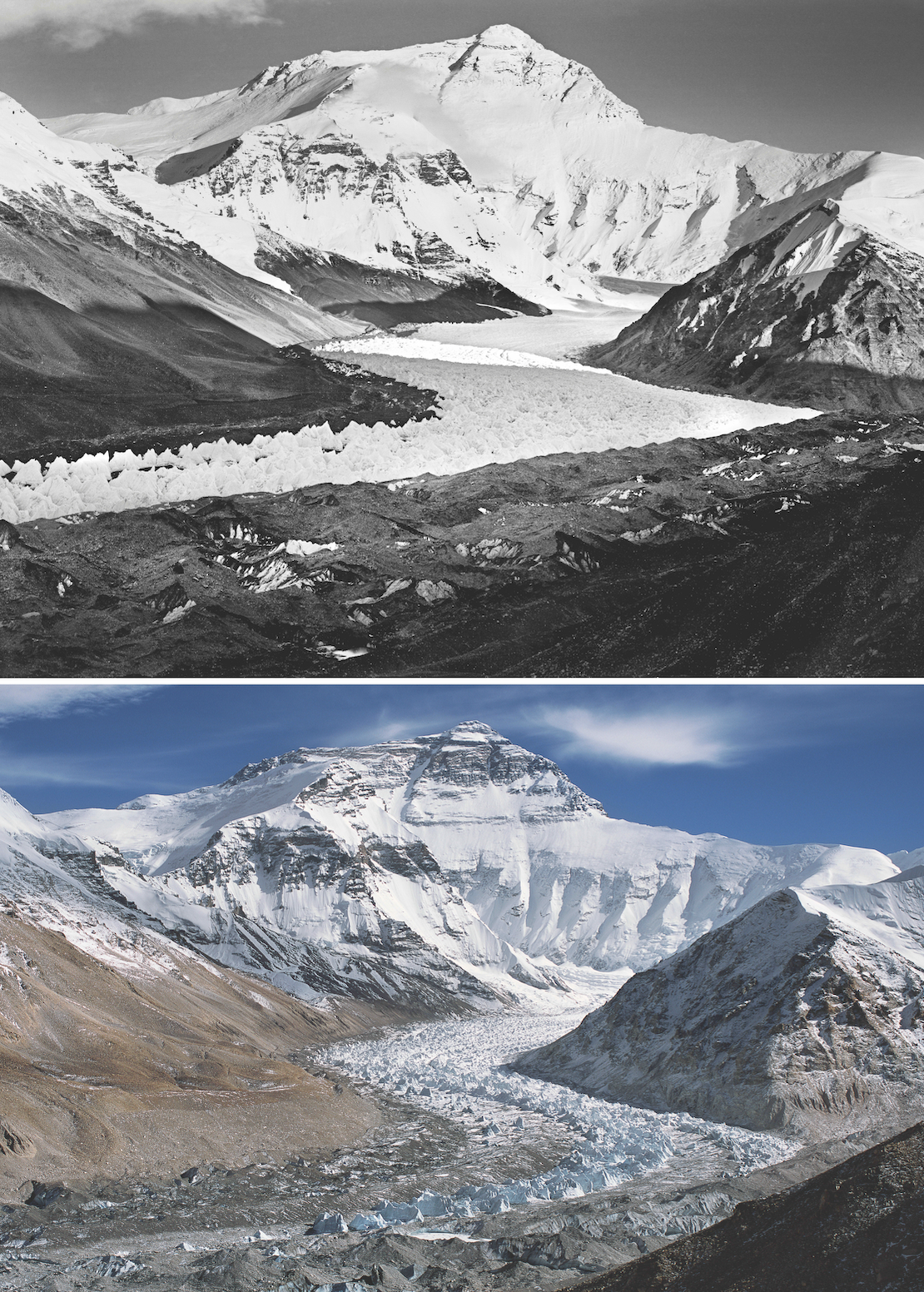
For more than a century, photographs have captured the transformation of the Greater Himalaya. GlacierWorks founder David Breashears turned those images into a powerful record of environmental change, retracing the footsteps of early explorers and photographers to precisely rephotograph glaciers decades later. His matched photographs made change visible. Today, GlacierWorks is expanding that legacy by pairing repeat photography with field science to investigate not only how Himalayan glaciers are changing, but why, and what those changes mean for mountain environments and the communities connected to them.
From Photographic Record to Scientific Observatory
Glaciers are more than ice. They are dynamic archives and sensitive indicators of changes occurring in the atmosphere, climate, and surrounding landscape. The next generation of GlacierWorks field expeditions combines repeat photography with environmental observations and sampling. Our work is developing around three interconnected areas:
Glacier Change
Repeat photography remains at the heart of GlacierWorks. By returning to historic photographic locations, and to the locations documented by David Breashears, we can extend visual records of glacier retreat, thinning, changing snow cover, expanding glacial lakes, and landscape transformation. These photographs become increasingly valuable as their record grows longer. A view photographed a century ago, revisited by David decades later, and photographed again today can reveal changes spanning generations.
Pollution in the Cryosphere
Even the world's highest mountains are connected to the global atmosphere. GlacierWorks Lead Scientist Dr. Ulyana Horodyskyj Peña studies pollutants deposited in snow and ice, including light-absorbing particles such as black carbon, microplastics, and emerging contaminants such as PFAS. Light-absorbing particles can darken snow and reduce its reflectivity, potentially increasing absorption of solar energy and accelerating melt. Microplastics and other contaminants provide another record of how human activity reaches environments that can appear extraordinarily remote. By collecting snow and ice samples alongside photographic observations, GlacierWorks can connect visible landscape change with processes occurring on and within the snow and ice itself.
Changing Mountain Hazards
As glaciers retreat and high mountain environments warm, the landscape around them changes as well. Glacial lakes can expand. Previously frozen slopes can destabilize. Ice, rock, and water can interact in ways that produce cascading hazards far downstream. Understanding these changing environments requires observations across disciplines and across time. GlacierWorks expeditions document these landscapes from the ground, complementing satellite observations and existing scientific monitoring while building records that future researchers can return to.
David Breashears understood that photographs could do something scientific measurements alone often cannot: allow people to see environmental change immediately. He also recognized that the photographs were the beginning of the conversation, not the end of it. GlacierWorks is carrying that philosophy forward. We are bringing together historical archives, repeat photography, field measurements, scientific partnerships, and storytelling to create a long-term record of change across the world's highest mountains. The goal is not simply to document what is disappearing. It is to understand what is changing and leave a record that allows the next generation to continue the work.
Science Across Generations